
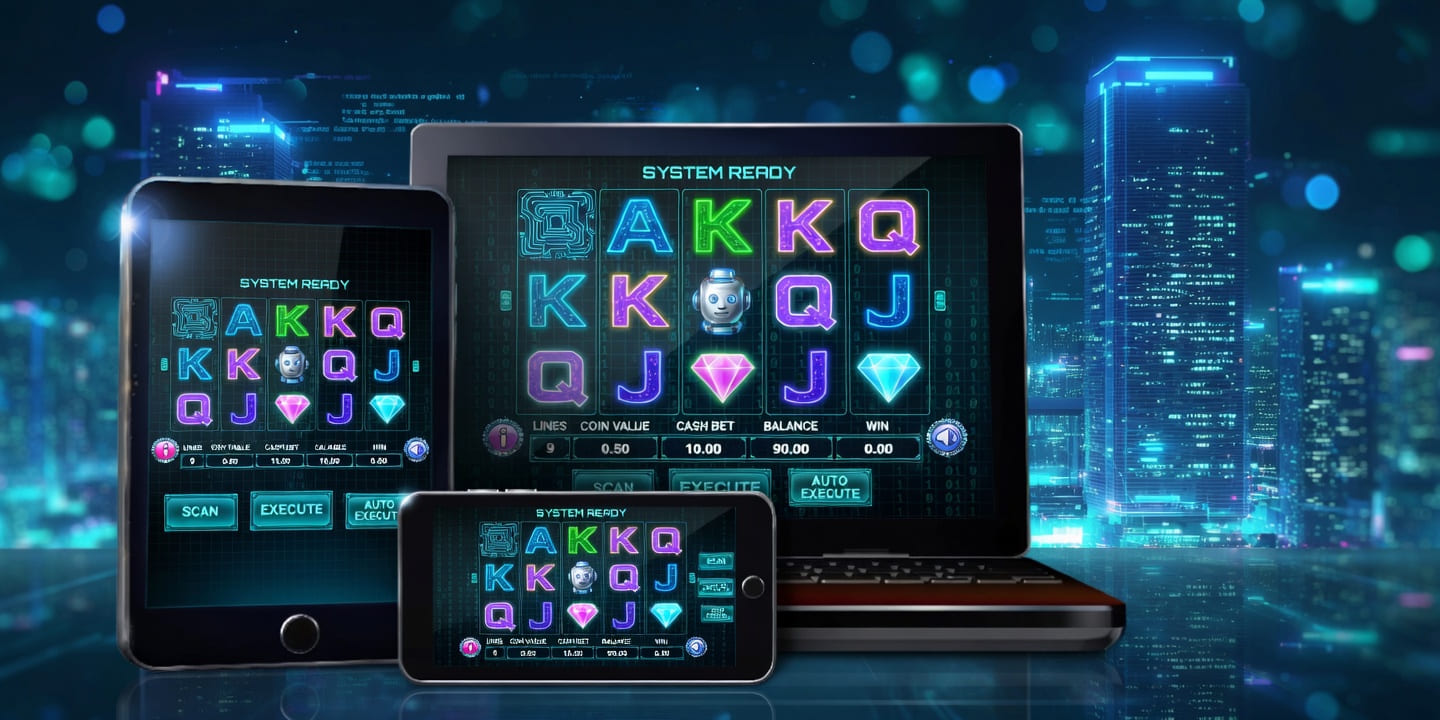
As we move deeper into 2026, the way we interact with technology has undergone a radical transformation. I have been at the forefront of the iGaming industry for over a decade, and I can tell you that the shift from tactile interfaces to vocal commands is the most significant leap since the invention of the touchscreen. We are no longer tethered to a mouse or a smartphone screen; instead, we are entering an era of ambient gaming where the interface is invisible. When we look at the latest generation of slots, the integration of Natural Language Processing (NLP) has made it possible to execute complex betting strategies with nothing more than a whisper. From my perspective inside the casino development labs, this isn’t just a gimmick for the tech-savvy; it is a fundamental redesign of the user experience that prioritizes speed, immersion, and accessibility in a way that was unthinkable just a few years ago.
The infrastructure of 2026 allows for near-zero latency in voice recognition. Our servers can now process a vocal command, verify the user’s identity through biometric voiceprinting, and execute the spin in less than 50 milliseconds. This “Conversational Gaming” model allows players to multitask, playing their favorite games while cooking, driving, or simply relaxing on a sofa without needing to lift a finger. This hands-free revolution is driven by the realization that the modern player values convenience and flow over traditional “click-and-wait” mechanics.
The Technological Architecture of 2026 Voice Gaming
To achieve this level of fluid interaction, we had to move beyond the simple “Siri-style” commands of the past. In 2026, we utilize what I call “Context-Aware Semantic Engines.” These engines don’t just listen for keywords like “Spin” or “Bet.” They understand the intent behind the player’s words. For example, if a player says, “Let’s try a ten-pound stake and see if we can trigger the bonus,” the AI understands the bet amount, the action, and the specific goal, adjusting the game settings accordingly.
This is made possible by the integration of Large Language Models (LLMs) directly into the game engine’s backend. These models are trained on millions of hours of human speech, allowing them to decipher thick accents, slang, and even emotional tone. As a representative of this technology, I find it fascinating how the game can now respond with its own AI-generated voice, creating a dialogue between the player and the machine. It makes the casino environment feel less like a software application and more like a high-end concierge service.
The Breakdown of Voice Commands and Actions
| Player Command | Action Executed by AI | Security Verification Level |
| “Start a five-minute session at 1.00 per spin” | Auto-play initialized with time-cap | Session Biometrics |
| “Show me my winning history from last night” | UI overlay of historical data | High-Level Identity Check |
| “Double the stake for the next three spins” | Immediate bet adjustment | Vocal Signature Match |
| “Withdraw fifty to my main wallet” | Financial transaction initialized | Multi-Factor Voice/Face Auth |
| “Explain the bonus mechanics for this title” | Audio-visual tutorial launched | None (Public Info) |
Accessibility: The Social and Ethical Imperative
One of the most rewarding aspects of my work in 2026 is seeing how voice control has opened the doors of the casino to everyone. For individuals with motor impairments or visual challenges, traditional online gambling was often a frustrating experience. Voice-controlled games have eliminated those barriers entirely. We are now seeing a surge in “Inclusive Design,” where the entire casino lobby is navigable by voice, allowing anyone with the power of speech to enjoy the same level of entertainment as any other player.
From an ethical standpoint, voice control also provides us with new tools for responsible gaming. Our AI can now detect “vocal stress” or signs of agitation. If a player’s voice becomes strained or desperate, the system can pause the game and offer a “cool-off” period. This proactive approach to player safety is a hallmark of the 2026 industry standard. We aren’t just letting you play hands-free; we are listening to ensure you are playing healthy.
Security: Your Voice is Your Passport
In the early days of voice tech, security was a major concern. Could someone record your voice and use it to log in? In 2026, that is impossible. We use “Dynamic Voice Biometrics” that analyze over 1,000 unique vocal markers, including pitch, cadence, and even the physical structure of your vocal cords. This is paired with “Liveness Detection,” which ensures that the voice is coming from a living person in real-time, not a recording or an AI clone.
I often tell our VIP players that their voice is the most secure key they have. It cannot be lost like a password or stolen like a physical token. Every time you speak a command, the system re-authenticates you in the background. This “Continuous Authentication” model makes unauthorized access nearly non-existent. If the “voiceprint” doesn’t match the account holder, the game shuts down instantly. It is a level of security that has finally put the “password era” to rest.
The Evolution of the Game Lobby Experience
The 2026 game lobby is no longer a grid of thumbnails. It is an “Interactive Lounge.” You enter by saying, “Hey Casino, show me what’s new and high-volatility.” The AI will then present a curated selection based on your previous preferences, explaining the themes and the potential rewards. This personalized discovery process is much more engaging than scrolling through endless menus.
Enhancing Immersion through Conversational AI
We have found that players who use voice commands report a much higher level of “Presence” in the game. When you talk to the game, you are more emotionally invested in the outcome. In 2026, our slot characters-like the “Viking Warrior” or the “Ancient Explorer”-are powered by AI. You can actually talk to them. You might ask the character, “Do you think we’ll hit the jackpot today?” and they will respond in character, based on the current game state.
This isn’t just about entertainment; it is about creating a “Social Layer” for the solitary player. The game becomes a companion. From my expert perspective, this is the future of the industry: moving away from static games and toward interactive, AI-driven experiences where the boundary between the player and the game’s narrative is blurred by the power of speech.
Integration with Wearables and the Smart Home
By 2026, the casino app is no longer just on your phone. It is integrated into your smart glasses, your watch, and your home’s ambient audio system. You can walk through your house and say, “Casino, keep the reels spinning on my watch,” and the session continues seamlessly as you move. This “Ubiquitous Gaming” is the logical conclusion of the hands-free movement.
I often use the example of a player who is wearing AR (Augmented Reality) glasses while cooking. They can see the game reels projected onto their kitchen wall, and they control everything with simple vocal nudges. It doesn’t interrupt their life; it complements it. The hardware has become invisible, and the voice has become the primary conductor of the experience.
The “Neural-Link” Horizon: Beyond the Voice
While we are currently focused on voice in 2026, we are already looking at the next step: “Sub-Vocal” and “Neural-Link” control. We are testing sensors that can pick up the electrical signals sent from the brain to the vocal cords, even if no sound is made. This would allow for “Silent Voice Control,” where you can play in public places like a library or a bus by simply “thinking” the commands.
As a representative of this forward-thinking industry, I believe that voice is the bridge to this silent future. We are training our AI to recognize the patterns of thought that lead to speech. It sounds like science fiction, but the foundations are already being laid in the 2026 landscape. For now, the power of the spoken word remains our most potent tool for creating a truly hands-free, high-stakes environment.
FAQ
Is voice-controlled gaming safe in noisy environments?
Yes, the 2026 noise-cancellation technology is incredibly advanced. Our software uses “Spectral Subtraction” and “Beamforming” to isolate the player’s voice from background noise like city traffic, barking dogs, or television sounds. It focuses specifically on the “Vocal Signature” of the account holder, meaning that even if someone else in the room shouts a command, the game will ignore it and only listen to you.
Can I play in languages other than English?
Absolutely. In 2026, we support over 100 languages and nearly 1,000 regional dialects. Our NLP engine is “Universal,” meaning it can switch between languages in real-time. If you start a session in Spanish and decide to switch to English mid-way through, the AI will adapt instantly without needing you to change any settings.
What happens if I lose my voice or have a sore throat?
We have built-in “Acoustic Flexibility.” The system can recognize your voice even if your pitch or tone changes due to a cold or a sore throat, as long as the underlying “Vocal Architecture” remains consistent. However, if your voice is completely gone, you can always switch back to traditional touch or mouse controls as a backup.
Can children use my voice to access the game?
No. The biometric voiceprint is as unique as a fingerprint. Our “Liveness and Age Detection” algorithms can easily distinguish between the voice of an adult and a child. Even if a child tries to mimic your voice or use a recording, the system will detect the lack of “adult vocal maturity” and “live biometric pulse,” keeping the account secure.
How do I handle large bets via voice without making a mistake?
We use a “Vocal Confirmation” protocol for high-value actions. If you say “Bet 500,” the AI will respond with, “You are about to bet 500, is that correct?” You must provide an affirmative response before the transaction is finalized. This prevents accidental high-stakes wagers caused by a slip of the tongue.
Does the AI listen to my private conversations?
This is a major privacy concern that we solved in 2026 through “On-Device Trigger Word Detection.” The app is not “streaming” your audio to our servers 24/7. It only begins transmitting data once it hears the specific “Wake Word” (like “Hey Casino”). Everything else is ignored and processed locally on your device, ensuring that your private life stays private.
Are voice commands faster than manual clicking?
In many cases, yes. To manually change your bet, go to the menu, and then start a spin takes about 5 seconds. With voice, you can say, “Max bet and spin,” which takes about 1.5 seconds. For the professional player who values “Spins Per Minute” (SPM), voice control is the most efficient way to maximize their session.
Can I control the “Live Dealer” games with my voice?
Yes, and this is where the immersion truly shines. In 2026, you can talk to the live dealer as if you were sitting at a real table in Las Vegas. Instead of typing in a chat box, you speak, and the dealer hears your voice (translated if necessary) through their headset. It makes the social interaction feel much more authentic and less like a digital simulation.
Will voice control drain my phone battery faster?
Surprisingly, no. In 2026, we have “Voice-Optimized Power Profiles.” Because the screen can be dimmed or even turned off while you are playing by voice, you can actually save a significant amount of battery life. The “Audio-Only” mode is the most efficient way to play for long periods while on the move.
What is the “Emotional AI” feature in 2026?
This is an expert-level feature that analyzes the “Sentiment” of your voice. If the system detects that you are having a lot of fun, it might suggest a more upbeat music track or a more energetic game character. If it detects frustration, it might suggest a lower volatility game or provide a helpful tip to improve your experience. It is about creating a game that “feels” with you.
Conclusion
The rise of voice-controlled gaming in 2026 is a testament to the fact that the best technology is that which becomes invisible. We have moved beyond the age of buttons and into an era where the human voice-the most natural and ancient form of communication-is the ultimate tool for high-stakes entertainment. As a representative of this industry, I have seen firsthand how this shift has made gaming more inclusive, more secure, and infinitely more immersive. We are no longer just “playing” games; we are living within them, directing the action with our words and experiencing the results with a level of freedom that was previously a dream of science fiction. The hands-free revolution is not just a trend; it is the new standard of excellence that defines the 2026 iGaming landscape.
Looking ahead, the potential for this technology is limitless. As AI continues to evolve, the “Conversational Slot” will become a standard part of every digital household, a personalized entertainer that knows your preferences, respects your boundaries, and responds to your every command with surgical precision. For the player, this means a safer, faster, and more enjoyable experience. For us, the developers, it means a new canvas upon which we can paint the future of human play. The reels are spinning, the voice is leading, and in 2026, the future of the casino is finally, and firmly, in your own words. The silence of the old-school interface has been replaced by the vibrant dialogue of the new age, and we couldn’t be more excited to hear what you have to say.